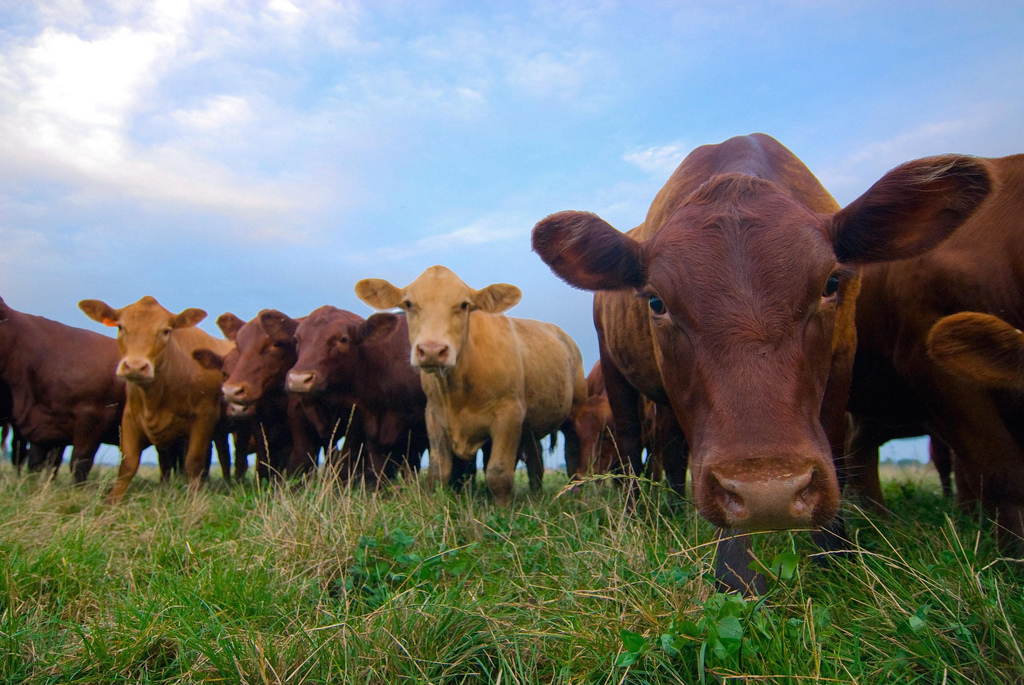
A Pasco County cattle rancher says President Trump's 90-day pause on beef import tariffs could put local operations out of business if the policy sticks around.
Joe Planz, owner of Providence Cattle Company, supplies beef to restaurants and hotels across Tampa Bay. He told Spectrum Bay News 9 that the flood of cheaper foreign beef would make it impossible for ranchers like him to compete.
"Something like they're proposing, if that goes longer than 90 days, it'll put ranchers like me out of business," Planz said.
Tariff pause aims to lower grocery costs
Trump announced Aug. 21 on Truth Social that the U.S. will allow up to 300,000 metric tons of ground beef to be imported without the usual tariff for 90 days. The imported beef, he said, will be sold at 25% below current market prices.
The goal is to bring down grocery costs. Ground beef averaged $6.89 per pound in July, up 57% from five years ago, according to Federal Reserve Bank of St. Louis data reported by AgriNews.
The administration said an executive order formalizing the latest pause would be signed within two weeks of the Aug. 21 announcement, according to NewsNation. If the 90-day window holds, the pause would expire in mid-November.
Local rancher says foreign exporters lack community ties
Planz said his operation hires locally and donates to the community. Foreign exporters, he said, are just dumping beef into the U.S. market without any local ties.
Cattlemen's groups push back on import policy
The concern extends beyond Pasco County. The Florida Cattlemen's Association released a statement opposing the pause, calling government intervention in the cattle market a threat to producer confidence and long-term beef supply stability. The National Cattlemen's Beef Association, or NCBA, also pushed back. NCBA CEO Colin Woodall said in a statement that flooding the market with government-subsidized beef sold below market rates would not help rebuild the American cattle herd.
U.S. cattle herd at smallest size since 1951
The U.S. cattle herd has been shrinking for eight consecutive years. As of Jan. 1, the U.S. Department of Agriculture, or USDA, counted 86.2 million head, the smallest inventory since 1951, according to Drovers. The 2025 calf crop dropped 2% from 2024 to 32.9 million head, the lowest since 1941.
Economist doubts pause will meaningfully lower prices
Abby Hall, a professor of economics at the University of Tampa, offered some perspective on the policy's likely consumer impact. Americans eat about 33 million metric tons of ground beef per year. The tariff pause covers 300,000 metric tons, less than 1% of annual consumption. Hall said she would not expect prices to come down significantly given that the pause covers such a small share of the market.
Second import expansion in a year
This is not Trump's first move to increase beef imports. In February 2026, he signed an executive order allowing 80,000 metric tons of beef from Argentina into the country.